How to Choose the Right Alaska Cruise Itinerary
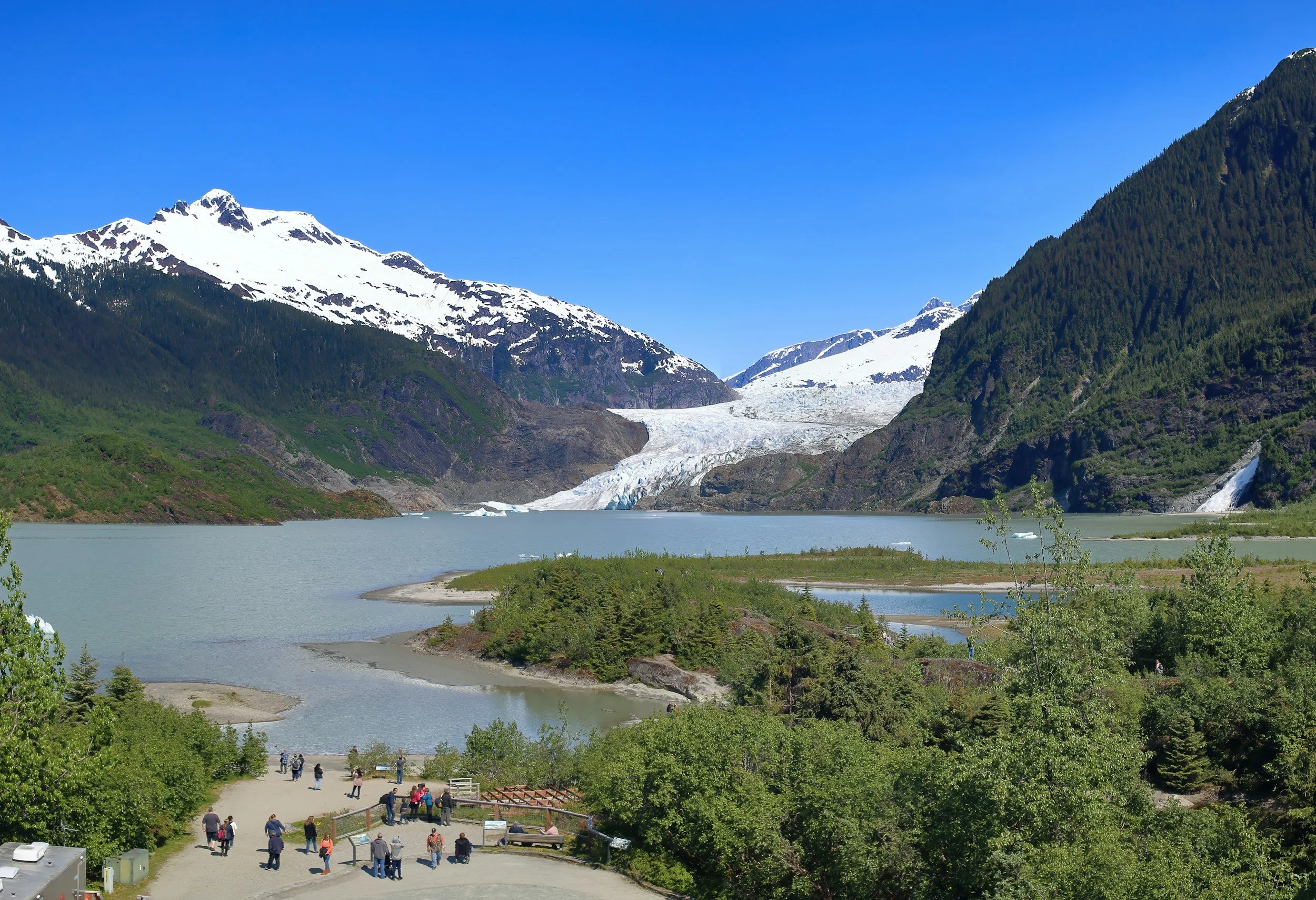
Mendenhall Glacier in Juneau, Alaska
The ship matters, but the route will determine what you actually experience.
Alaska is often described as a cruise destination, but there is no single Alaska cruise experience. Two seven-night sailings can look similar at first and deliver very different trips once you compare the ports, glacier viewing, sailing direction and time in each destination.
I recently returned from an Alaska cruise aboard Oceania Riviera. The experience reinforced something I tell travelers often: choose the itinerary before you become attached to the ship. The ship shapes your comfort, dining and service. The itinerary determines how much of Alaska you will see.
Start with the three basic itinerary types
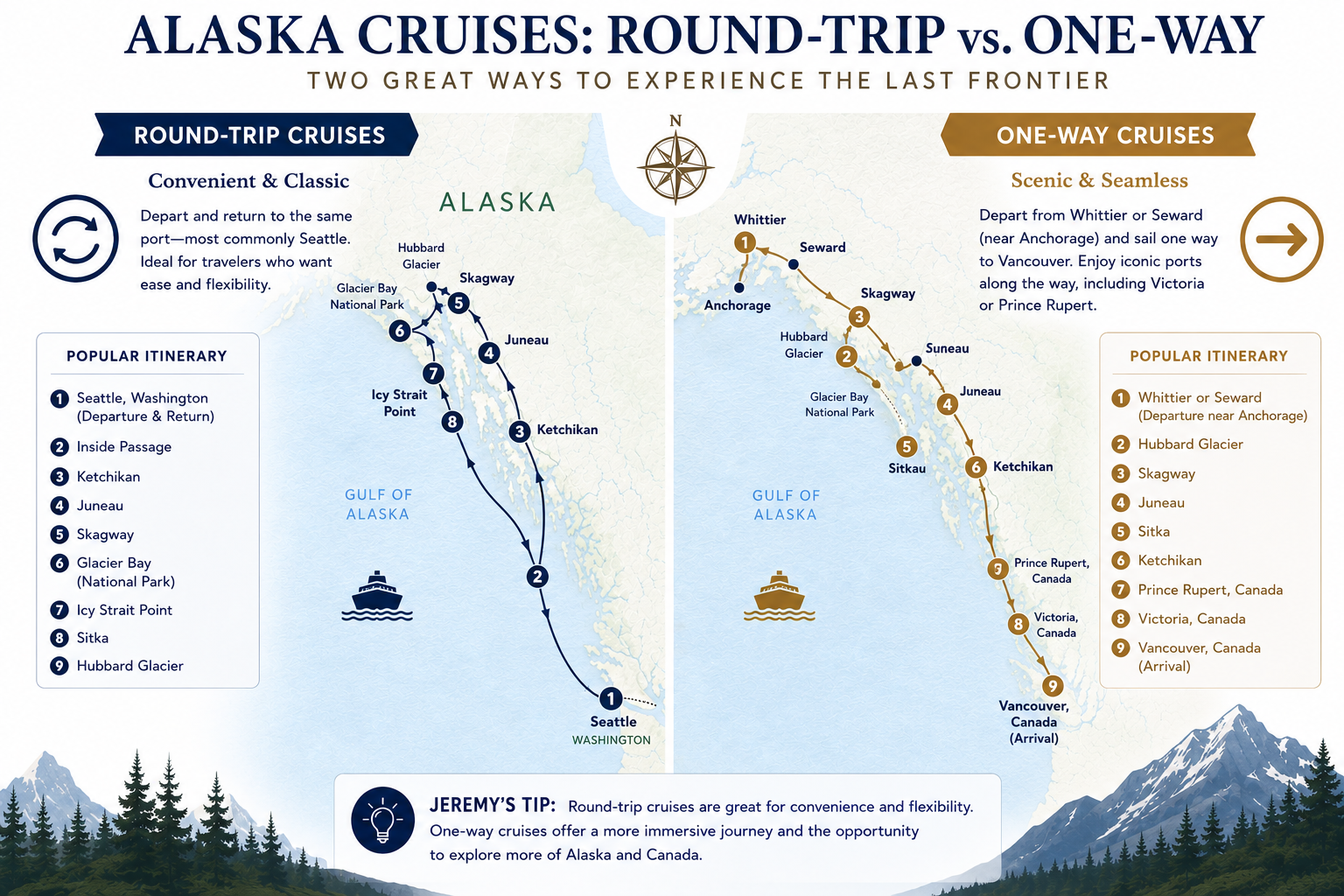
Comparison of Round-trip vs One-way Alaska cruises.
Round-trip Inside Passage
These cruises usually depart from Seattle or Vancouver and return to the same city. They are convenient, easy to pair with flights and often include familiar ports such as Juneau, Ketchikan and Skagway. They work well for a first Alaska cruise, especially when you have one week and want a straightforward vacation.
The tradeoff is distance. A round-trip sailing may devote more time to getting into and out of Alaska, particularly from Seattle. Compare the actual port hours and scenic cruising rather than assuming every Inside Passage itinerary is equivalent.
One-way Gulf of Alaska
A one-way cruise usually sails between Vancouver and Whittier or Seward. These itineraries can reach farther north and make it easier to add a land program in Anchorage, Denali or the Kenai Peninsula. They are the best choice when Alaska is the central purpose of the trip and you have ten days or more.
The logistics require more planning. Flights may be less direct, transfers take longer and the land portion needs careful sequencing. The result can be a much more complete Alaska experience.
Small-ship or expedition-style Alaska
Small ships can enter narrower waterways, spend more time close to nature and offer a more active program. These trips appeal to travelers who care more about wildlife, kayaking, hiking and access than large-scale entertainment or extensive onboard facilities.
A useful rule
Round-trip cruises prioritize convenience. One-way cruises prioritize range. Small-ship cruises prioritize access and immersion.
Make glacier viewing a non-negotiable
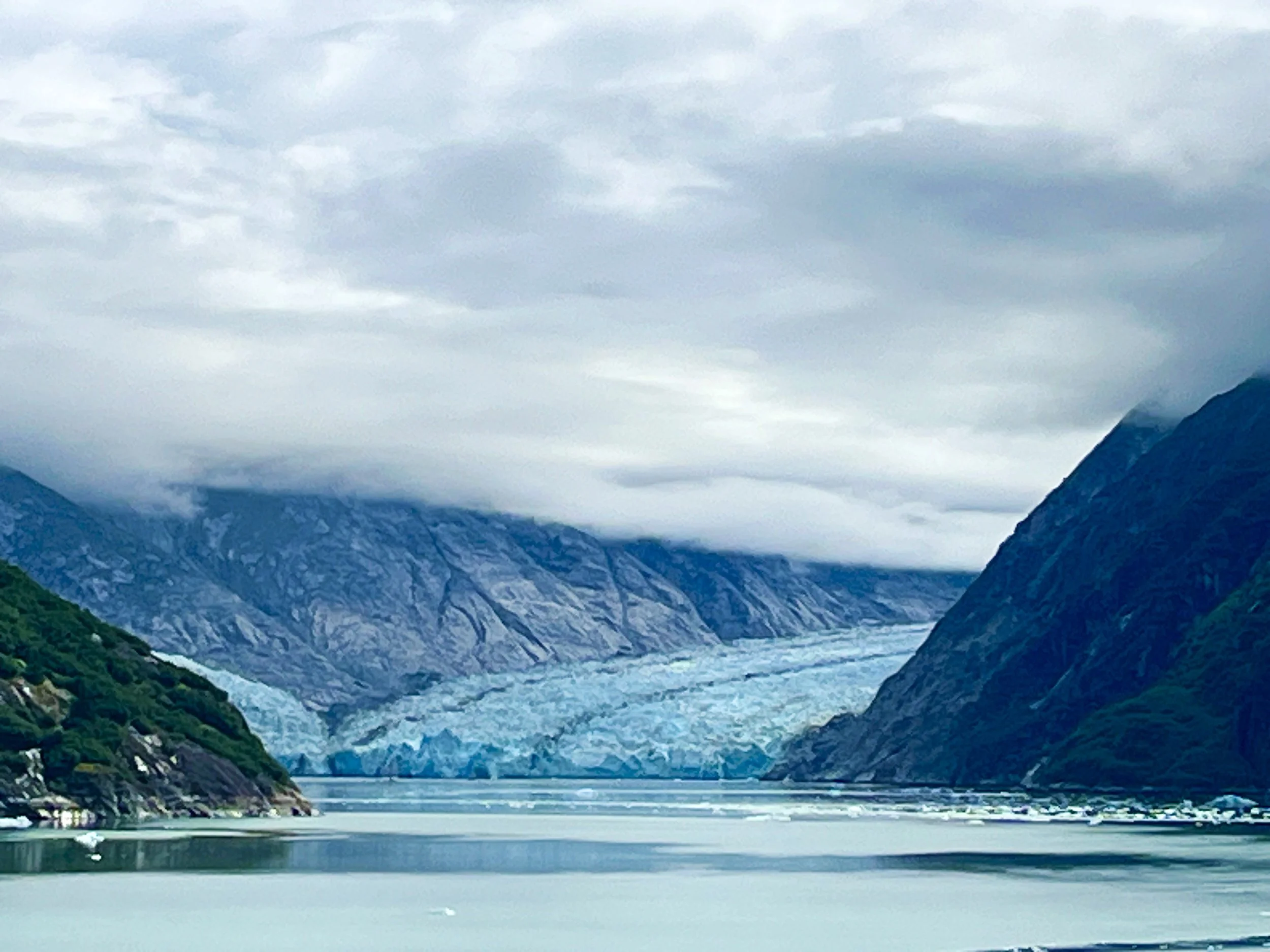
Hubbard Glacier, Alaska (June 2026 from Oceania Riviera)
A strong Alaska itinerary should include meaningful glacier viewing. Glacier Bay, Hubbard Glacier, Tracy Arm and Endicott Arm are not interchangeable. Weather, ice and local conditions can affect access, so no itinerary can guarantee a specific view. Still, the route should give you a credible opportunity.
Glacier Bay is especially valued because ships enter a protected national park landscape and may carry park rangers or naturalists who provide interpretation. Hubbard Glacier can offer dramatic scale and active calving. Tracy Arm and Endicott Arm combine narrow fjords, waterfalls and the possibility of viewing tidewater glaciers at the end of the passage.
Look closely at the itinerary wording. “Scenic cruising” can mean several hours in a major glacier area, or it can describe a shorter passage through a scenic channel. Ask what the ship normally attempts and how much time the schedule allows.
Compare ports by what you want to do
The most common ports each support a different kind of day.
Juneau: Strong for whale watching, dog sledding, flightseeing, the Mendenhall Glacier area and access to a broad range of excursions.
Ketchikan: A good match for Native culture, fishing, rainforest scenery and Misty Fjords flightseeing or boat trips.
Skagway: Known for Gold Rush history and the White Pass route. It often supports an easy full-day excursion.
Haines, near Skagway is far less touristy and more interesting for local culture. Only smaller ships visit Haines.
Sitka: A more layered combination of Russian history, Tlingit culture, wildlife and a less commercial port atmosphere. My personal favorite.
Icy Strait Point and Hoonah: Strong for whale watching, bear viewing and Tlingit cultural experiences. Icy Strait Point is a brand new “commercial” destinations created by the cruise lines, but you can walk 25 minutes to the quaint local town of Hoonah for some “real Alaska"".
Port time matters as much as the port name. A six-hour call can limit your options. A ten-hour call creates room for a major excursion and time to explore independently. Also check arrival time. An early morning port call may be excellent for wildlife, but it changes how you use the evening before.
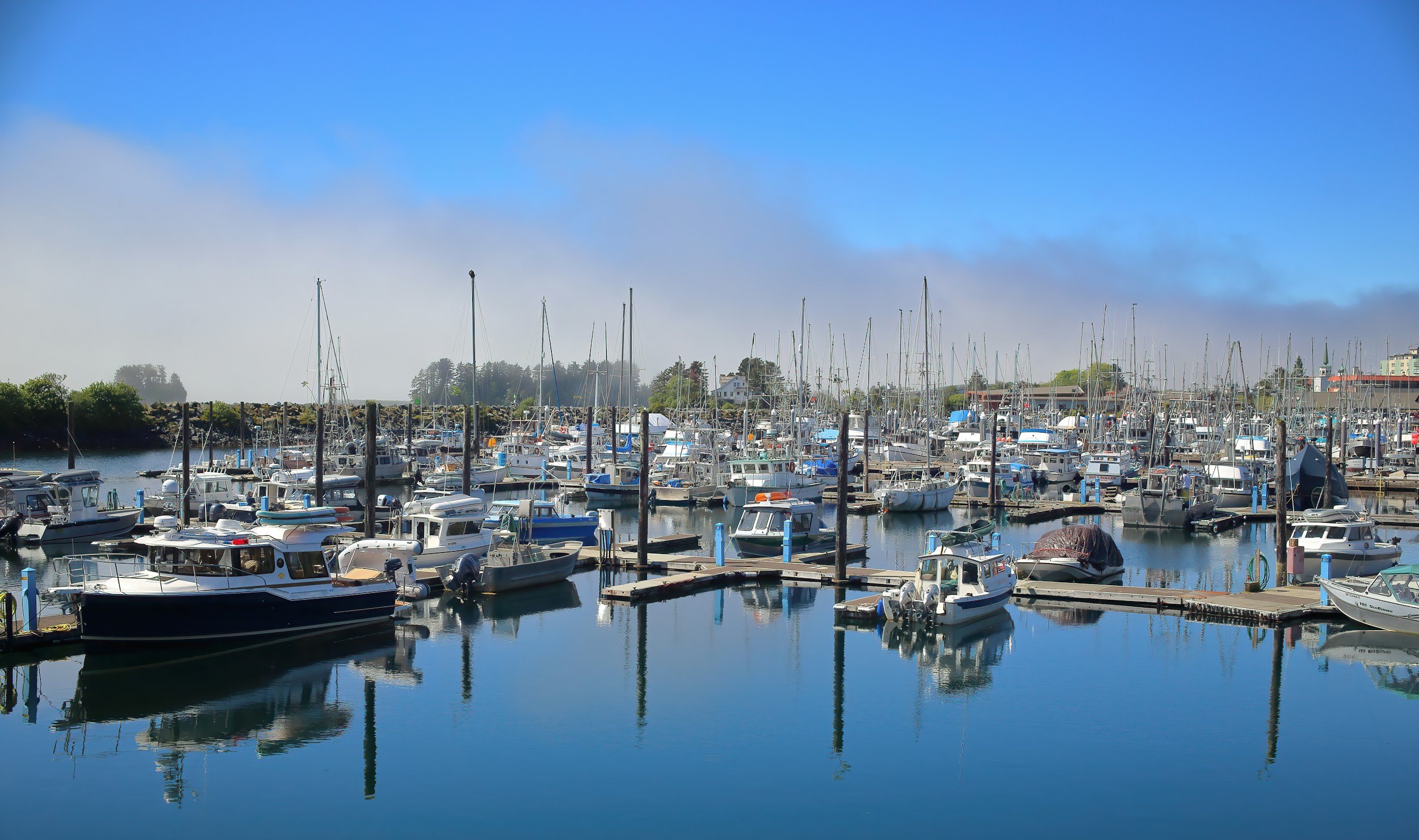
Sitka, Alaska
Choose the ship for your preferred pace
Once you have narrowed the itinerary, compare ships. My sailing on Oceania Riviera offered a more refined, destination-focused experience than a large resort-style ship. Dining, public spaces and service supported a relaxed pace, and the ship felt like part of the trip rather than the center of it.
Larger ships can offer more entertainment, children’s programming, casual dining and onboard activity. Smaller or premium ships may deliver a calmer atmosphere, fewer crowds and stronger dining. Expedition ships emphasize enrichment and access. There is no correct category. The question is how you want to spend the hours between ports.
Do not overlook the departure city
Vancouver is often the stronger embarkation point for travelers who want a more scenic Inside Passage routing and an excellent pre-cruise city stay. Seattle can offer simpler U.S. flight logistics. Seward and Whittier create access to Southcentral Alaska but require transfers from Anchorage.
Plan to arrive at least one night before embarkation. For Vancouver or Seattle, two nights can turn a travel buffer into a worthwhile city stay. For a one-way itinerary, the pre- or post-cruise land plan deserves the same attention as the cruise itself.
My Alaska itinerary checklist
1. Identify the glacier experience and confirm that it is a real itinerary feature.
2. Compare total port hours, not simply the number of ports.
3. Choose ports that support the excursions you value most.
4. Decide whether you want round-trip convenience or a one-way land-and-sea trip.
5. Match the ship size and onboard style to your travel preferences.
6. Review flight and transfer logistics before committing to the sailing.
7. Book high-priority excursions early, especially flightseeing and small-group wildlife trips.
The best Alaska cruise is the one built around your priorities
A traveler focused on glaciers may choose differently from someone focused on wildlife. A family may value a larger ship. A couple celebrating a milestone may prefer a quieter premium experience. A traveler with two weeks may gain far more from a one-way sailing and land program than from repeating a familiar round-trip route.
The itinerary deserves careful comparison because Alaska is not a destination where every port day can be recreated later. Weather changes, wildlife moves and distances are significant. A well-chosen route gives you better opportunities and fewer compromises.
Considering an Alaska cruise? I can help compare routes, ships, cabin categories and pre- or post-cruise options so your trip fits the way you want to experience Alaska.
Recommended links
· Travel Alaska: Inside Passage — Official regional overview.
· Travel Alaska: Ports of Call — Useful summary of common cruise ports and Glacier Bay.
· Travel Alaska: Glacier Bay Area — Background on Glacier Bay and its landscape.
· Oceania Cruises — My recent experience on Oceania Riviera in Alaska was fantastic..
· National Park Service: Glacier Bay — Authoritative planning and educational resource.